
- December 27, 2025
- Posted by: We Remotify
- Category: Blog
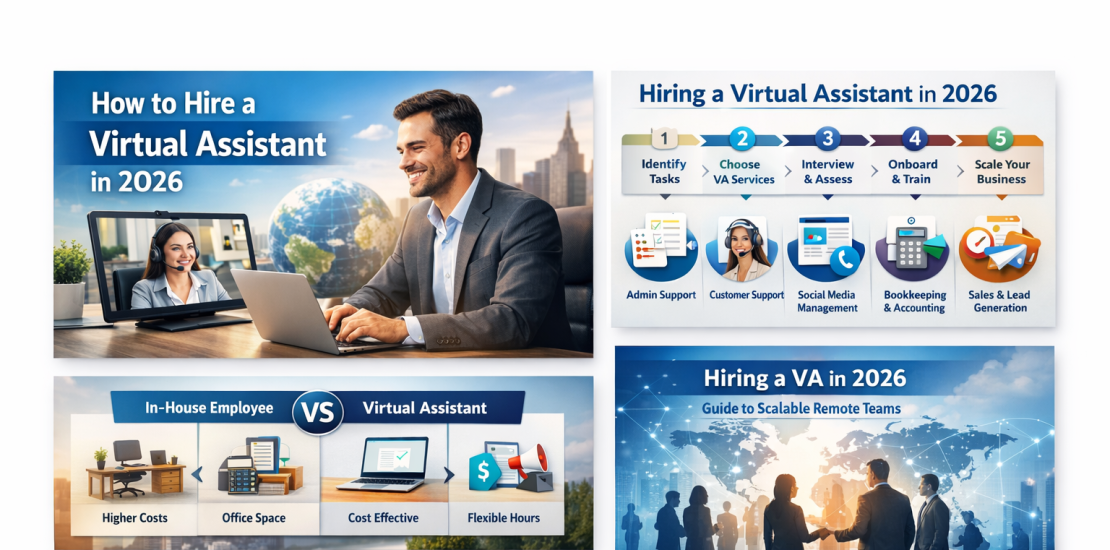
The way businesses operate has fundamentally changed. By 2026, hiring a virtual assistant (VA) is no longer a cost-cutting experiment—it’s a strategic decision for scaling efficiently, staying competitive, and focusing leadership time on growth.
From startups and e-commerce brands to real estate firms and professional services, companies across industries are now asking the same question: how to hire a virtual assistant in 2026 the right way.
This complete guide walks you through everything you need to know—from understanding virtual assistant services to hiring, onboarding, and managing a VA successfully in today’s global remote workforce.
Why Hiring a Virtual Assistant in 2026 Makes Business Sense
The demand to hire virtual assistants in 2026 is driven by three major shifts:
1. Remote Work Is the Global Standard
Businesses are no longer limited by geography. Accessing skilled talent globally allows companies to hire faster, smarter, and more affordably.
2. Rising Operational Costs
Hiring in-house employees comes with overhead—office space, equipment, benefits, and taxes. Virtual assistants eliminate most of these costs while delivering the same (or better) productivity.
3. Focus on Core Growth
Business owners are increasingly outsourcing administrative, operational, and repetitive tasks so they can focus on strategy, sales, and customer experience.
What Is a Virtual Assistant in 2026?
A virtual assistant is a remote professional who supports your business with specific tasks or roles. In 2026, VAs are no longer limited to basic admin work.
Modern Virtual Assistant Services Include:
- Administrative support & inbox management
- Calendar scheduling & CRM management
- Customer support (chat, email, phone)
- Social media management & outreach
- Data entry & reporting
- Accounting & bookkeeping assistance
- Research, lead generation & sales support
- Recruitment coordination & HR support
The scope of virtual assistant services is broader and more specialized than ever before.
Step-by-Step: How to Hire a Virtual Assistant in 2026
Step 1: Identify Tasks You Should Delegate
Before you hire a VA, list tasks that:
- Consume too much of your time
- Are repetitive or process-driven
- Don’t require your direct expertise
Common examples:
- Email and calendar management
- Follow-ups with leads or clients
- Data updates and reporting
- Customer inquiries
This clarity ensures you hire the right VA—not just any VA.
Step 2: Decide Between Freelancers vs. VA Service Providers
When planning to hire a virtual assistant in 2026, businesses usually choose between:
Freelance Platforms
Pros:
- Lower upfront cost
- Flexible hiring
Cons:
- Time-consuming screening
- Inconsistent quality
- Limited accountability
Virtual Assistant Service Providers
Pros:
- Pre-vetted talent
- Structured onboarding
- Backup and replacement options
- Ongoing support
Cons:
- Slightly higher cost than freelancers
For businesses focused on reliability and scale, professional VA service providers are becoming the preferred choice in 2026.
Step 3: Choose the Right Skill Set
Virtual assistants today are role-based, not generic.
Ask yourself:
- Do I need an admin VA, customer support VA, or sales VA?
- Is industry experience important?
- Do I need part-time or full-time support?
Clearly defining your requirements improves performance and retention.
Step 4: Interview and Assess Properly
Even when using VA services, you should:
- Conduct at least one interview
- Test communication skills
- Review past experience and tools used
- Assess time zone compatibility
Key tools VAs commonly use in 2026:
- Google Workspace / Microsoft 365
- CRM tools (HubSpot, Salesforce)
- Project management (Trello, ClickUp, Asana)
- Communication tools (Slack, Zoom)
Step 5: Onboard Your Virtual Assistant for Success
A strong onboarding process is critical.
Best practices include:
- Documented SOPs (Standard Operating Procedures)
- Clear KPIs and expectations
- Access to tools and credentials
- Regular check-ins during the first 30 days
Businesses that invest in onboarding see significantly higher ROI from their virtual assistants.
How Much Does It Cost to Hire a Virtual Assistant in 2026?
Costs vary based on:
- Role complexity
- Experience level
- Hours required
- Location
Average Global VA Cost in 2026:
- Entry-level admin VA: $5–8/hour
- Skilled VA (CRM, support, bookkeeping): $8–15/hour
- Specialized roles: $15–25/hour
Compared to local hiring, virtual assistants offer substantial cost savings without sacrificing quality.
Common Mistakes to Avoid When Hiring a VA
Many businesses fail not because of the VA—but because of poor processes.
Avoid:
- Hiring without defined tasks
- Poor communication
- No performance metrics
- Treating VAs as “temporary help” instead of team members
Successful companies integrate virtual assistants into their workflows and culture.
The Future of Virtual Assistant Services
By 2026 and beyond:
- VAs will be more specialized
- AI tools will support (not replace) human VAs
- Hybrid teams (in-house + virtual) will dominate
- Businesses that don’t adapt will struggle to scale
Hiring a VA is no longer optional—it’s a competitive advantage.
Final Thoughts: Hiring a Virtual Assistant in 2026
If you want to grow faster, reduce costs, and stay focused on what matters most, now is the time to hire a virtual assistant in 2026.
With the right strategy, tools, and support, virtual assistant services can transform how your business operates—today and in the years ahead.
Stay Connected With Us
Follow We Remotify for insights on remote staffing, virtual assistant services, and global hiring trends:
- 🎥 YouTube: We Remotify
- 🐦 X (Twitter): @WeRemotify
- 💼 LinkedIn: We Remotify
- 📘 Facebook: We Remotify
- 📸 Instagram: @we_remotify